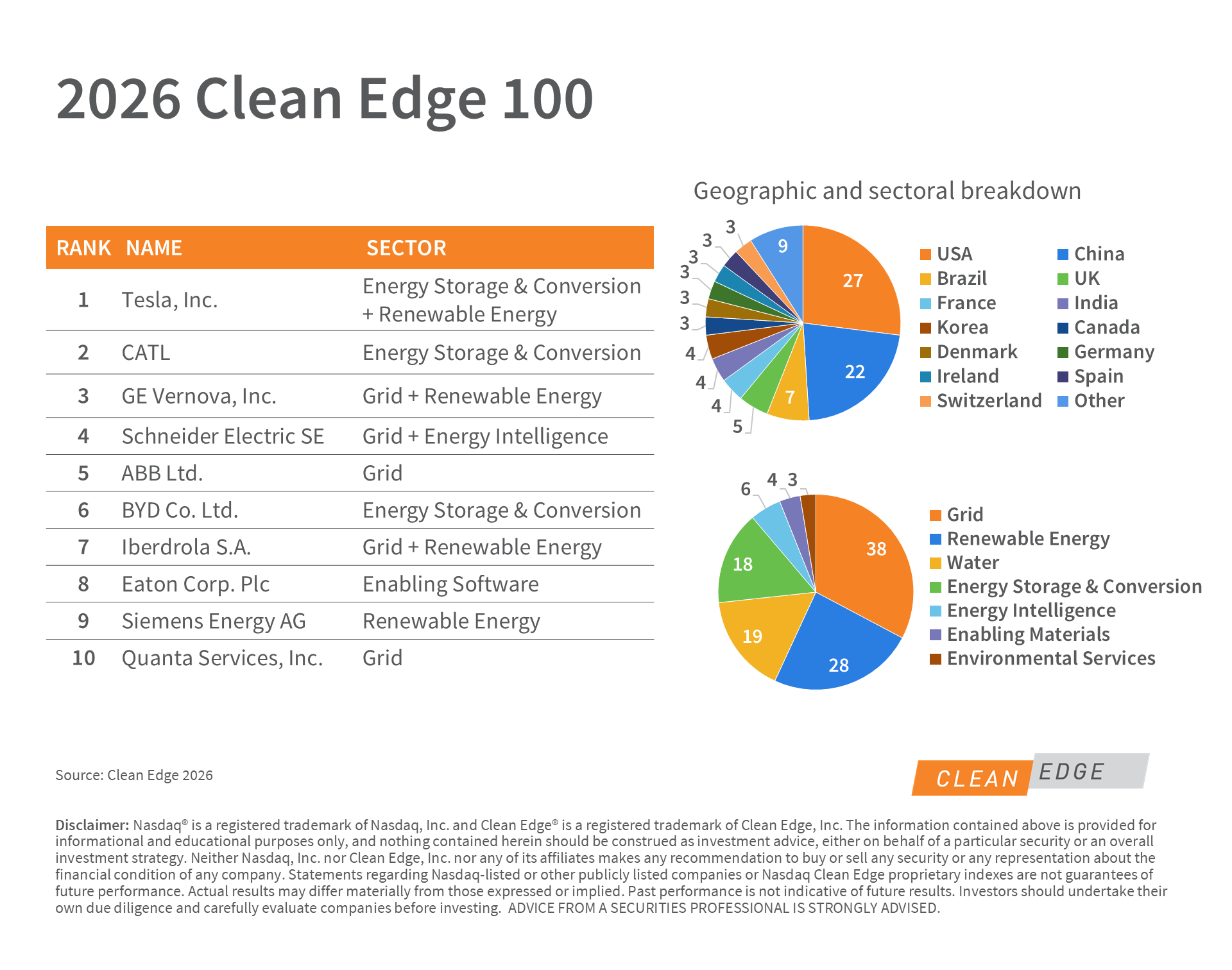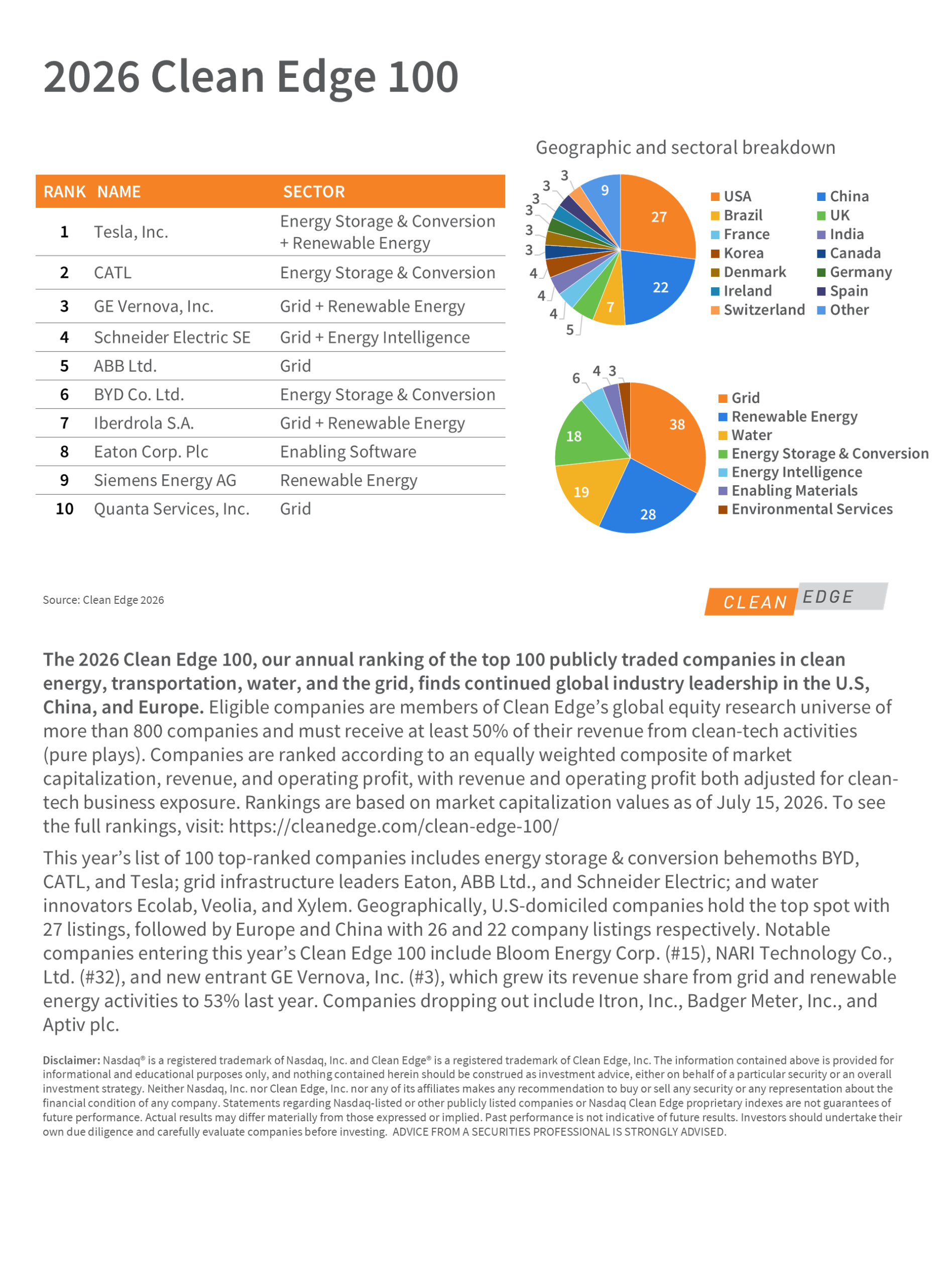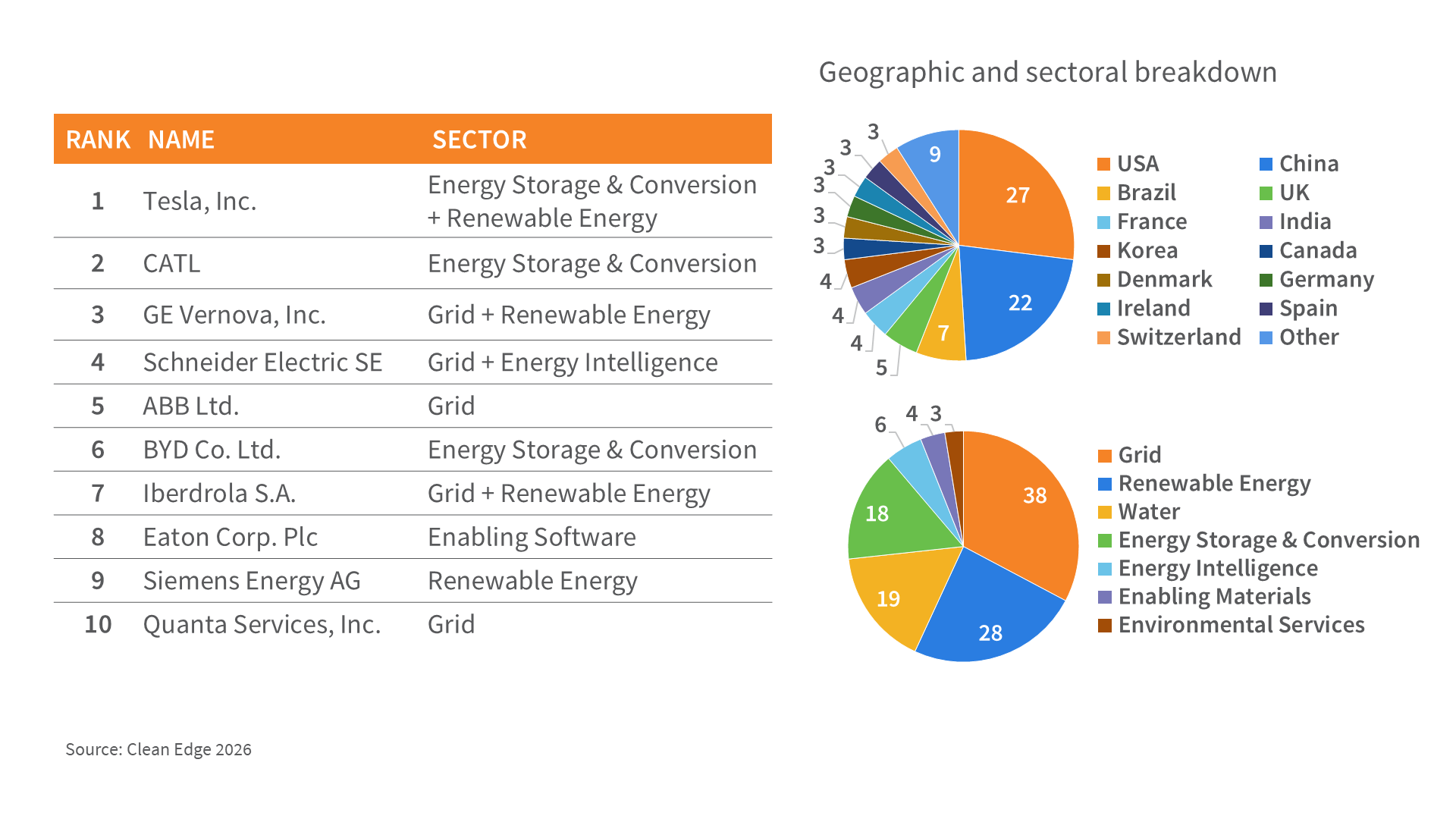
The 2026 Clean Edge 100, our annual ranking of the top 100 publicly traded companies in clean energy, transportation, water, and the grid, finds continued global industry leadership in the U.S, China, and Europe. Eligible companies are members of Clean Edge’s global equity research universe of more than 800 companies and must receive at least 50% of their revenue from clean-tech activities (pure plays). Companies are ranked according to an equally weighted composite of market capitalization, revenue, and operating profit, with revenue and operating profit both adjusted for clean-tech business exposure. Rankings are based on market capitalization values as of July 15, 2026. To see the full rankings, visit: https://cleanedge.com/clean-edge-100/
This year’s list of 100 top-ranked companies includes energy storage & conversion behemoths BYD, CATL, and Tesla; grid infrastructure leaders Eaton, ABB Ltd., and Schneider Electric; and water innovators Ecolab, Veolia, and Xylem. Geographically, U.S-domiciled companies hold the top spot with 27 listings, followed by Europe and China with 26 and 22 company listings respectively. Notable companies entering this year’s Clean Edge 100 include Bloom Energy Corp. (#15), NARI Technology Co., Ltd. (#32), and new entrant GE Vernova, Inc. (#3), which grew its revenue share from grid and renewable energy activities to 53% last year. Companies dropping out include Itron, Inc., Badger Meter, Inc., and Aptiv plc.